
Wiped Film Distillation: Residual Solvent Removal
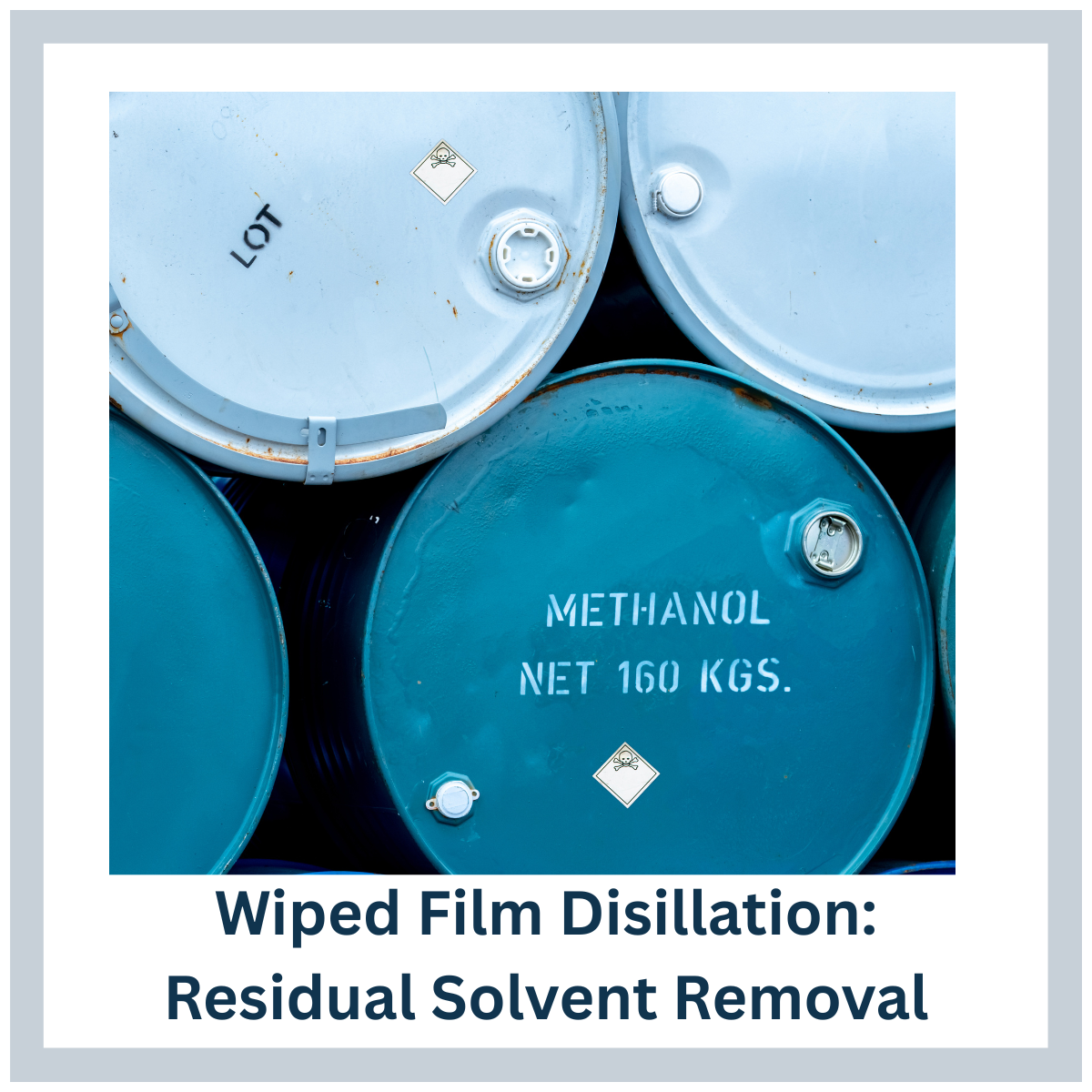
Wiped film distillation excels at residual solvent reduction and removal.
However, many chemical companies are not aware of the technology and waste days by using other distillation techniques.
Prior to joining Pope Scientific as their Tolling Manager, I worked at a pharmaceutical company. One of the APIs that we made was a thick oil. In order to get the final product, we performed chromatography and then used a rotovap to remove the solvent. Once we has stripped the many gallons of solvent to get our pint of final oil, we needed to dry the oil to very low levels of residual solvent.
First, we placed it on a small rotovap and pulled on the flask for many hours until all solvent removal stopped. Then the oil was moved to a kugelrohr device and dried for at least 24 hours. At this point it was tested for residual solvents.
This process should have been done with the correct technology – which is the wiped film still. The oil was thin enough to flow well, so it would run through as small still well. A wiped film still can attain vacuum levels to rival the kugelrohr and the wipers mix up and sheer the thin film allowing the solvents to escape.
The entire drying step on a wiped film still would have been reduced from 24 hours to 20 minutes.